Your child’s first period does not need a perfect conversation, a big announcement or all the answers at once. A little information, a few practical essentials and the reassurance that they can come to you are a lovely place to start.
Whether you are a parent or guardian planning ahead, or a young person wondering what to expect, this guide is here to make getting ready feel a little less daunting.
At Ulluv, we believe growing up should come with kindness, clear information and support that feels right for your family.
How do I help my child get ready for their first period?
Help your child prepare for their first period by explaining what a period is, showing them how to use a pad and putting a small first period kit in their school bag. Agree on a trusted adult they can ask for help, and reassure them that periods are normal, questions are welcome and there is nothing to be embarrassed about.
You do not need to cover everything in one chat. Small, everyday conversations can feel more comfortable than a formal “big talk”.
What is a first period?
A first period is the first time someone has menstrual bleeding. It is one of the changes that can happen during puberty.
A simple way to explain it is:
“As your body grows, the womb starts building a soft lining. When that lining is not needed, it leaves your body through your vagina as a little blood and tissue. That is called a period. It is not an injury, and you have not done anything wrong.”
The HSE’s guide to periods explains what happens during menstruation and the different products available.
Getting a period does not mean your child suddenly needs to feel grown-up. They are still themselves, with the same interests, needs and right to be cared for.
When do first periods start?
According to the HSE, periods usually begin at around age 12, although some children start earlier or later. There is no single birthday when a first period is supposed to arrive.
Other puberty changes, such as breast development and pubic hair growth, usually happen before periods begin. The HSE explains that periods often start about two years after the first signs of puberty, but timing varies.
Try not to compare your child’s development with siblings, classmates or your own experience. Preparing ahead is helpful; trying to predict an exact date is not necessary.
If your child has no signs of puberty by 13, or has not started their period by 15, contact your GP for advice. You can read more in the HSE’s guidance on delayed first periods.
For more on the changes that can come beforehand, read our guide to signs your child may be approaching their first period.
How to talk about periods without making it a big deal
Start with what your child already knows. You might ask, “Have you talked about periods in school?” or “Would you like me to show you what these pads are for?”
Keep your explanations clear and matter-of-fact. Use words such as period, womb and vagina, and let your child know that they can ask questions now or another day.
Reassuring things you can say
- “Everyone’s body has its own timing.”
- “You can always tell me if you notice blood in your underwear.”
- “We can practise using a pad before you need one.”
- “If something leaks, we will sort it out. You are not in trouble.”
- “You get to decide who you want to tell.”
It is fine if you feel a little awkward too. You could simply say, “Nobody explained this very well to me when I was younger, so I want you to feel more prepared.”
How this connects with SPHE in Ireland
Ireland’s Junior Cycle Social, Personal and Health Education (SPHE) curriculum includes learning about reproductive health. The NCCA’s supporting classroom resources include menstrual wellbeing, linked to learning outcome 3.5: considering the importance of taking care of reproductive health.
These resources recognise that understanding menstruation matters whether or not a young person has periods themselves. You can explore the Junior Cycle SPHE classroom resources on Curriculum Online.
You do not need to wait for a particular school lesson before talking at home. A useful starting point is asking what your child has already heard and whether anything has left them confused or worried.
What might a first period look like?
A first period may be lighter than your child expects. It could begin with a few reddish-brown spots in their underwear rather than a sudden flow of bright red blood.
The HSE explains that period blood can be red on heavier days and pink, brown or black on lighter days. Periods generally last between two and seven days, but your child’s first experience may not look exactly like someone else’s.
Some young people notice cramps or discomfort; others have very little. Your child does not need to experience every symptom they have heard about for it to be a period.
If you are reading this before your own first period
You do not have to know everything already. If you notice blood in your underwear, tell an adult you trust and ask for a pad or another period product. You have not done anything wrong, and you do not need to manage it on your own.
If you feel sore, frightened or unwell, say so. Asking for help is always okay.
What should you put in a first period kit?
A first period kit is a small collection of supplies your child can reach for when their period begins. It does not need to be expensive or complicated. The aim is to make sure they know what is there and how to use it.
A simple first period kit checklist
- A few sanitary pads, with a chance to look at and practise using one beforehand.
- A clean pair of underwear.
- A small pouch to keep everything together.
- A separate washable wet bag or suitable bag for any stained underwear.
- A short note with a trusted adult’s name or a reassuring message, if your child would find that helpful.
For school, choose something that fits easily into their bag and is simple to open. Let your child help pack it so the contents are familiar.
At home, show them where spare products are kept and make sure they can reach them without having to ask each time.
Would a ready-made first period kit help?
You can put together your own kit, or choose a ready-made option if that makes getting organised easier.
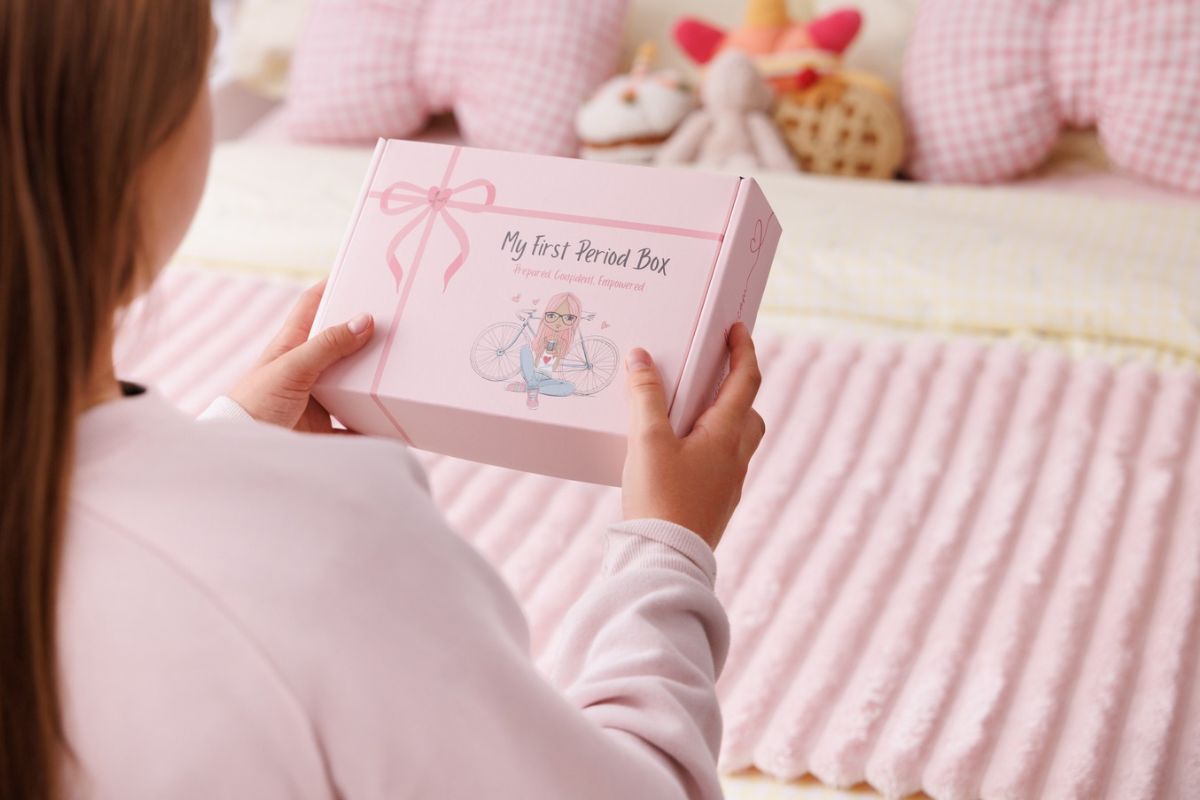
Ulluv’s Her First Period collection includes My First Period Box, along with a first period booklet and other practical extras. It is a thoughtful starting point for families who would like a little help preparing.
Whether you choose a box or a simple pouch from home, take a few minutes to go through it together. The most useful kit is one your child feels comfortable using.
How to show your child how to use a pad
Pads sit in the underwear and absorb period blood. They do not need to be inserted into the body.
Before their first period arrives, you can open a pad together and demonstrate on a spare pair of underwear:
- Wash your hands.
- Open the wrapper and remove the backing from the sticky side of the pad.
- Place the sticky side onto the inside of the underwear, with the absorbent side facing upwards.
- If the pad has wings, fold them around the sides of the underwear and stick them underneath.
- Check that the pad feels comfortable and is sitting where it will catch the blood.
- When changing it, wrap the used pad and put it in a suitable bin, not the toilet. Wash your hands afterwards.
Follow the product’s instructions about changing it, and explain that a pad should be changed sooner if it feels wet, uncomfortable or full. Help your child plan opportunities to check it during the school day.
The HSE also describes other options, including period underwear, tampons and menstrual cups. There is no need to introduce everything at once or pressure your child to use a product they do not feel ready for.
You can compare the options in the HSE’s period products guidance.
What if their first period starts at school?
A school-day plan gives your child something practical to fall back on, even if they feel surprised.
Talk through these steps together:
- Go to the toilet when you notice bleeding or feel you need to check.
- Use a pad from your kit if you have one.
- If you need supplies, clean clothes or reassurance, ask your agreed trusted adult for help.
- Tell that adult if you are in pain, feel unwell or need to contact home.
A simple sentence to practise is: “I think my period has started. Could you help me get a pad?”
Beforehand, ask the school who pupils should go to for period supplies, where products are available and how your child can access the toilet when needed. Arrangements may differ between schools, so it helps to check rather than assume.
If there is a leak, keep your response calm: “Let’s get you comfortable and find some clean clothes.” It is a practical problem to solve, not something your child has done wrong.
Comfort, privacy and reassurance
When their first period arrives, start by asking what they need. That might be help with a pad, some clean underwear, a quiet chat or simply a little privacy.
Try: “How are you feeling about it?” rather than deciding in advance that they must feel excited or upset.
Do we need to celebrate?
Only if your child would like to. A small thoughtful gesture may feel lovely to one child and embarrassing to another. Ask before telling relatives, taking photos or making it a family announcement.
There is room for every response: pride, worry, indifference or a mixture of feelings. Your child does not have to feel any particular way.
What if they have cramps?
Ask how uncomfortable they feel and whether it is affecting what they can do. If you are considering pain relief, ask a pharmacist or GP about an option suitable for your child’s age and follow the medicine’s instructions.
Severe period pain should not be brushed off as something they simply have to put up with. The HSE advises contacting a GP for severe period pain.
If you are looking for gentle words to use, read our kind things to say when a first period arrives.
When should you ask for medical advice?
You do not need to wait until a problem feels serious before asking for advice. Contact your GP if you are concerned, particularly if:
- Your child has no signs of puberty by age 13.
- Their first period has not started by age 15.
- They have severe period pain.
- Bleeding lasts longer than seven days.
- They are soaking through a pad in an hour or less.
- After periods have started, they go more than three months without another one.
Seek urgent medical help if heavy bleeding is accompanied by fainting, marked dizziness or your child seems very unwell.
The HSE provides advice on delayed first periods and period symptoms. The American College of Obstetricians and Gynecologists’ first period guide and University of Chicago Medicine’s guidance for teens and pre-teens provide further information about bleeding patterns that should be checked.
First period FAQs
What age do children usually get their first period?
The HSE says periods usually start at around age 12, although they can begin earlier or later. Contact your GP if your child has no signs of puberty by 13 or has not had their first period by 15.
Can a first period be brown?
Yes. A first period may begin with reddish-brown spotting. The HSE explains that period blood can look pink, brown or black on lighter days, rather than always being bright red.
How long does a first period last?
It may last only a few days. Periods generally last between two and seven days, and early periods can be light. Speak to a GP if bleeding lasts longer than seven days or you are worried about how heavy it is.
Will the next period arrive exactly a month later?
Not necessarily. It can take time for a young person’s cycle to settle. Marking the first day of bleeding on a calendar can help you notice their pattern without expecting an exact date. If more than three months pass without another period, ask your GP for advice.
Do you need tampons in a first period kit?
No. A kit can contain pads, spare underwear and a pouch or bag for keeping everything together. Other products are available, but your child does not need to use tampons to be prepared.
Should I buy a first period kit before it happens?
Having supplies ready means you can show your child what they are and where to find them before they are needed. A small homemade kit is absolutely fine; a ready-made first period box is another option.
How can dads and other guardians help?
You do not need personal experience of periods to be supportive. Learn the basics, keep products available, listen without teasing and help your child get advice when they need it. Being a calm, trusted adult matters more than knowing every answer.
A gentle way to get ready, together
Preparing for a first period is not about making your child grow up faster. It is about helping them understand a change before it happens and making sure they know where to turn.
Start with one small conversation. Show them a pad. Pack a few essentials together. Then leave the door open for the next question.
Most of all, let your child know: “Whatever happens, we can figure it out together.”