Article: C-Section Hospital Bag Ireland: What Changes for a Planned Caesarean?
C-Section Hospital Bag Ireland: What Changes for a Planned Caesarean?
A planned Caesarean is still your baby's birthday, it just comes with a slightly different recovery. And that recovery shapes what you'll reach for in those first few days on the ward. So if you've been staring at a generic hospital bag checklist wondering what actually changes for a C-section, you're asking exactly the right question. This guide to your C-section hospital bag in Ireland breaks down exactly what to add, remove, and make easier to reach. So you arrive prepared, not panicked.
And even if a C-section is only a possibility rather than a plan, these small packing changes are still worth making.
The short answer: you'll want to add a few comfort and recovery items, remove anything that's hard to get on and off, and make easier to reach the things you'll need from your bed in the first 24 hours.
Let's break it down.
What to Keep From a Standard Hospital Bag Checklist
Most of what's on a standard hospital bag checklist stays exactly the same. You'll still need:
- Front-opening nightwear — the HSE recommends nightgowns or pyjamas with wide openings if you're breastfeeding, and front-opening styles are practical for theatre and recovery alike (
- Dressing gown, slippers, and flip-flops for the shower
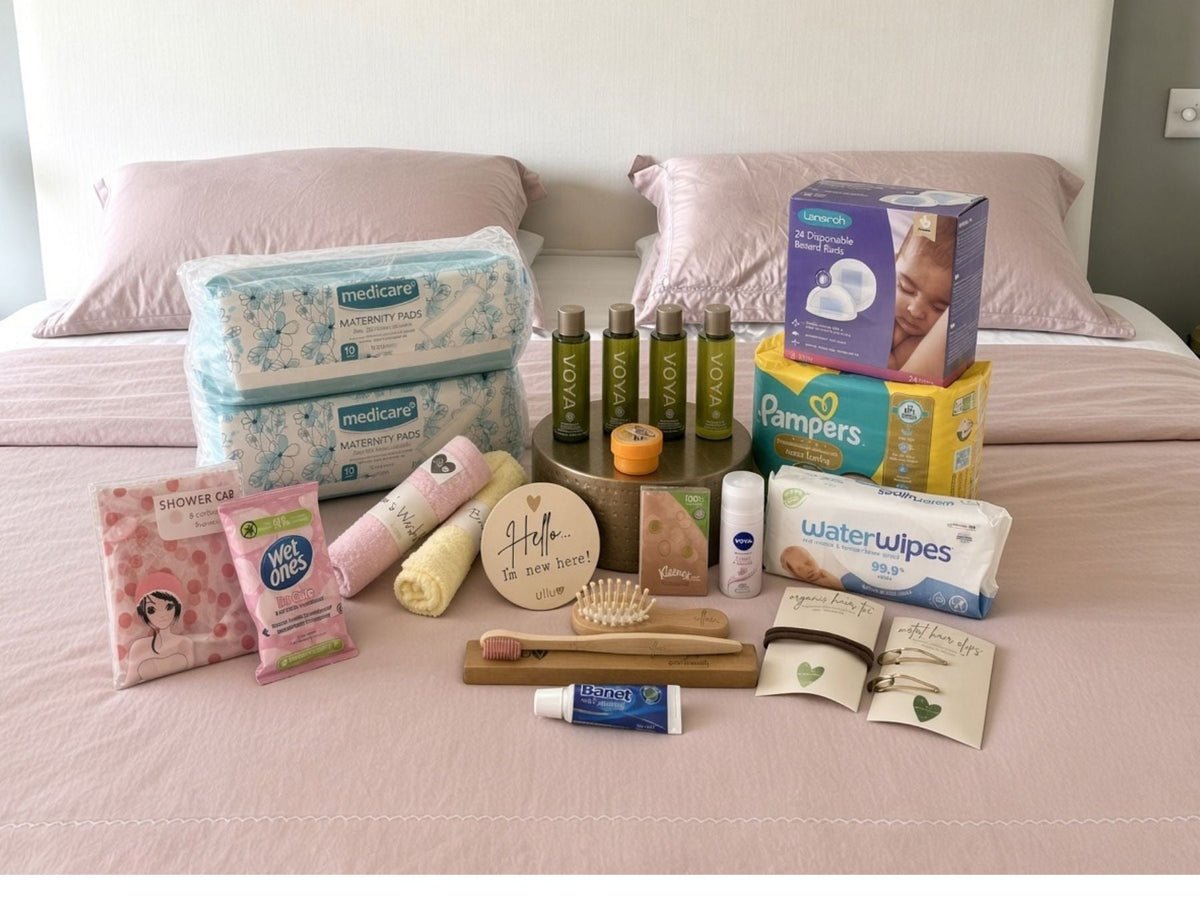
- Maternity pads — at least two large packs, and the HSE notes dark-coloured towels to avoid staining
- Baby essentials — six vests, six babygrows, nappies, cotton wool, a hat, and a cardigan, plus a car seat for the journey home
- Phone charger, lip balm, and toiletries — every Irish hospital list we reviewed includes these
The National Maternity Hospital also suggests packing separate bags for labour and your postnatal stay, which is a particularly good idea when you're recovering from surgery — more on that below.
What to Add for a C-Section
A planned Caesarean usually means a hospital stay of three to four days, compared to a shorter stay after a vaginal birth. That longer stay, plus the recovery itself, means a few extras are worth their place:
- High-waisted, full-brief underwear — the HSE advises loose, comfortable clothes and high-waisted pants so the waistband doesn't sit on your wound. The Rotunda specifically lists dark full-briefs on its packing list, and the NMH suggests around ten pairs
- A small firm pillow — the HSE suggests holding a pillow against your wound when coughing, laughing, or getting up from bed. This is one of the most practical additions you can make
- Extra maternity pads — the HSE notes that vaginal bleeding continues for several weeks after a C-section, and maternity pads (not tampons) are recommended. Pack more than you think you'll need for a longer stay
- Loose, front-opening clothes for the ward and going home — the HSE recommends loose-fitting clothes, and a going-home outfit that fits comfortably at around 26 weeks pregnant is a practical guide
- A portable phone charger or power bank — with a longer stay and limited mobility in the first day, you'll want your phone within easy reach
- Antibacterial wipes — the Coombe includes a pack of wipes on its list for a quick clean of your personal space
- Comforting extras — snacks, a water bottle, and something to pass the time. The HSE and all three hospitals we reviewed list these as essentials
What to Remove (or Leave at Home)
- Anything tight or low-waisted — skip the leggings with a low waistband, tight pyjama bottoms, or anything that presses on your tummy. The HSE is clear that waistbands should not irritate the wound
- Tampons — the HSE advises against using tampons after birth; stick to maternity pads
- Nail varnish or gel nails — the HSE notes that you'll be asked not to wear nail varnish or gel nails on the day of admission, as the healthcare team monitors your fingernails to check oxygen levels
- Valuables — every hospital we reviewed advises leaving valuables at home, and the Coombe notes there's no storage for suitcases; your partner may need to take larger bags home
- Anything you won't need in the first 24 hours — with a longer stay, pack lightly and leave the rest for your partner to bring in later. The HSE advises packing lightly because hospitals have limited space
What to Make Easier to Reach

This is the part that genuinely changes for a C-section. In the first day after surgery, you'll be in bed, possibly with a drip in your arm and a catheter in place (which is usually removed within 12 hours, according to the HSE). You won't want to bend, twist, or rummage. So think about what you'll need from your bed:
- Phone and charger — keep these within arm's reach, not at the bottom of a bag
- Lip balm and water bottle — you'll be asked to fast before the procedure and may be thirsty afterwards
- Maternity pads and fresh underwear — have these easy to hand, not packed deep in a holdall
- A small washbag with essentials — toothbrush, face cloth, deodorant. The Coombe and Rotunda both list a wash bag with toiletries as a priority
- Baby's first outfit and nappies — keep these in a separate, clearly labelled pouch so your partner can grab them quickly
- That pillow — have it ready on the bed, not packed away
This is where having your bag thoughtfully organised makes a real difference. If you've ever rummaged through a holdall at midnight looking for a phone charger, you'll know what we mean.
How to Pack: Theatre, Ward, and Going Home
The National Maternity Hospital suggests packing separate bags for labour and your postnatal stay, and the Rotunda recommends the same approach. For a planned C-section, this structure works particularly well:
1. Theatre / Recovery Bag (small, easy to carry)
Phone, charger, lip balm, a small towel, spare underwear, maternity pads, and baby's first outfit in a zip bag.
2. Ward Bag (your main bag)
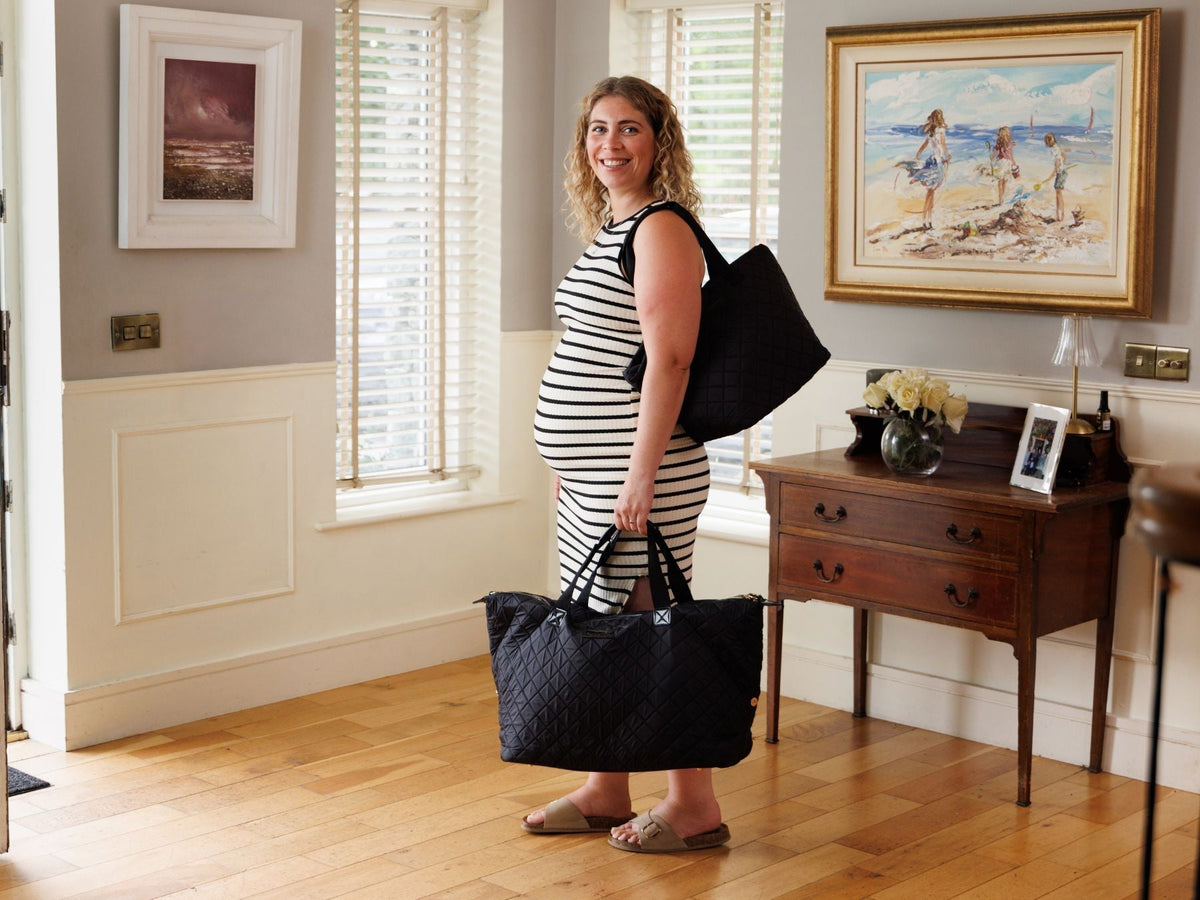
Nightwear, dressing gown, slippers, toiletries, extra underwear and pads, breast pads, baby clothes, nappies, snacks, and anything to pass the time. Many of our customers find using 2 separate holdalls for this purpose invaluable, one for mum's items and one for baby's. Again, making it easier to locate items post-birth.
3. Going-Home Items (left at home or in the car until needed)
Loose-fitting clothes for you, baby's going-home outfit, hat, blanket, and the car seat.
The NMH even suggests leaving larger bags in the car until after your baby is born, which is practical advice when ward lockers are small — the Coombe notes that locker capacity is limited and there's no storage for suitcases (which is why holdalls are so handy!).
Notes for Your Birth Partner
Your partner or support person plays a bigger role when you're recovering from surgery. The HSE notes that a physiotherapist may help you start moving around, and you may appreciate extra help in the early days. It helps if your partner knows exactly where things are. A few things worth packing for them (or getting them to pack for themselves):
- Phone charger and power bank
- Snacks and a water bottle
- A change of clothes and basic toiletries — the Coombe suggests packing your hospital bag with your birth partner so they can help locate things
- A list of who to contact — the HSE suggests storing the maternity ward phone number on your phone
Making It Easier: Organised and Pre-Packed Hospital Bags

If all of this feels like one more thing to think about on top of everything else, that's exactly where we come in.
Our Organised Packed Hospital Bags and Ultimate Packed Hospital Bags are designed to take the thinking out of hospital-bag prep, so you only need to add your own and baby's clothing.
And if you already have a bag (or bags) you love, our Ulluv NestPods are specifically designed hospital bag packing pods, designed to keep everything grouped and easy to find. They're the difference between rummaging and reaching.
We've been there. We've done the thinking, so you don't have to.
A Gentle Reminder
This guide is based on publicly available HSE guidance and hospital packing lists. Every hospital has its own list, and your midwife or consultant may have specific advice for your situation. Always check your hospital's website for their most up-to-date packing list, and follow your healthcare team's guidance.
Prepared for life's big days, and the everyday.
Thoughtfully yours.
Siobhán

Written by Siobhan Stack
Siobhán founded Ulluv from her own experience of life’s big moments. Every product is chosen, road-tested and packed by her — with the care she’d want someone to show her.